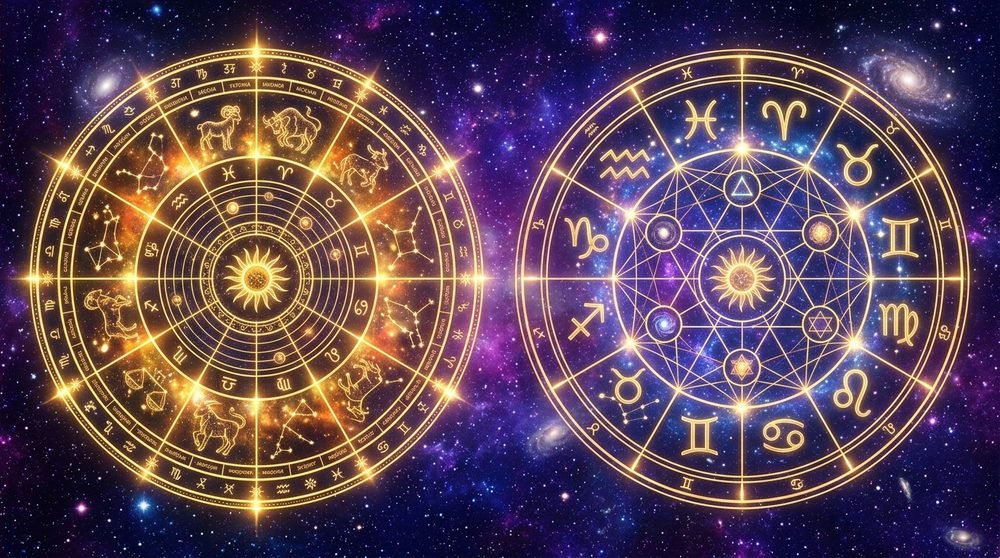
Sidereal vs. Tropical Zodiac: The Mathematical Divide
At the heart of the difference between Vedic astrology (known classically as Jyotish, Sanskrit for "the science of light") and Western astrology lies a fundamental astronomical distinction: the coordinate system used to measure the sky.
Western Astrology uses the Tropical Zodiac: This system is tied to the Earth's seasonal relationship with the Sun. The Tropical zodiac begins with 0° Aries fixed at the Vernal (Spring) Equinox, regardless of where the physical stars and constellations are actually located in the sky.
Vedic Astrology uses the Sidereal Zodiac: The word sidereal is derived from the Latin sidereus, meaning "pertaining to the stars." Vedic astrology measures planetary positions against the actual, visible backdrop of fixed constellations in space.
Understanding the Ayanamsha (~24° Shift)
Due to the Earth's slow axial wobble—a phenomenon known in modern astronomy as the Precession of the Equinoxes—the Tropical zodiac drifts backward against the fixed stars at a rate of approximately 1 degree every 72 years. Over centuries, this has accumulated into an offset of roughly 23° to 24°, known in Vedic astrology as the Ayanamsha (most commonly the Lahiri Ayanamsha). As a result, approximately 85% of people find their signs shift back by one constellation in Vedic charts.
Birth Charts & Planetary Placements
Beyond the zodiacal coordinate systems, the visual representation and analytical weight given to different planets differ substantially:
| Component | Vedic Astrology (Jyotish) | Western Astrology |
|---|---|---|
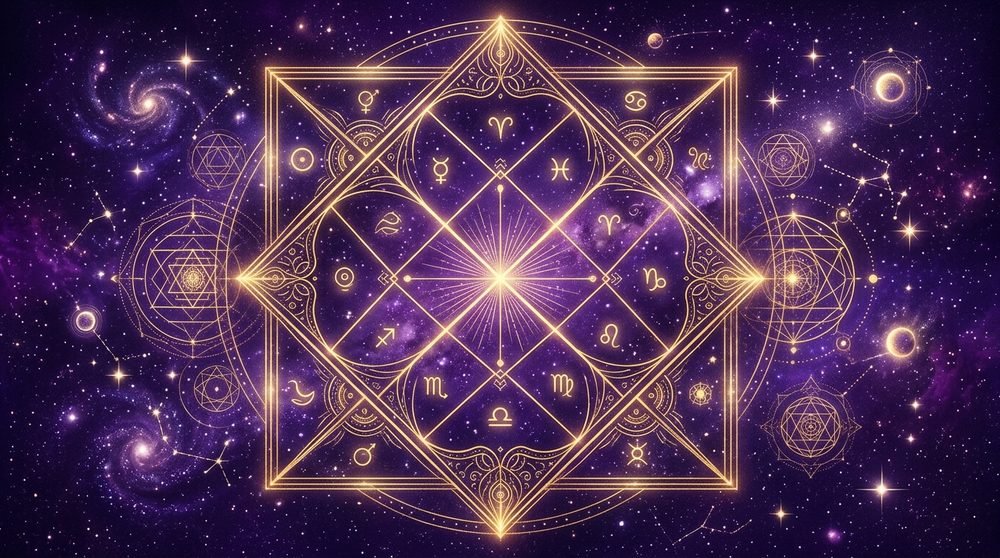
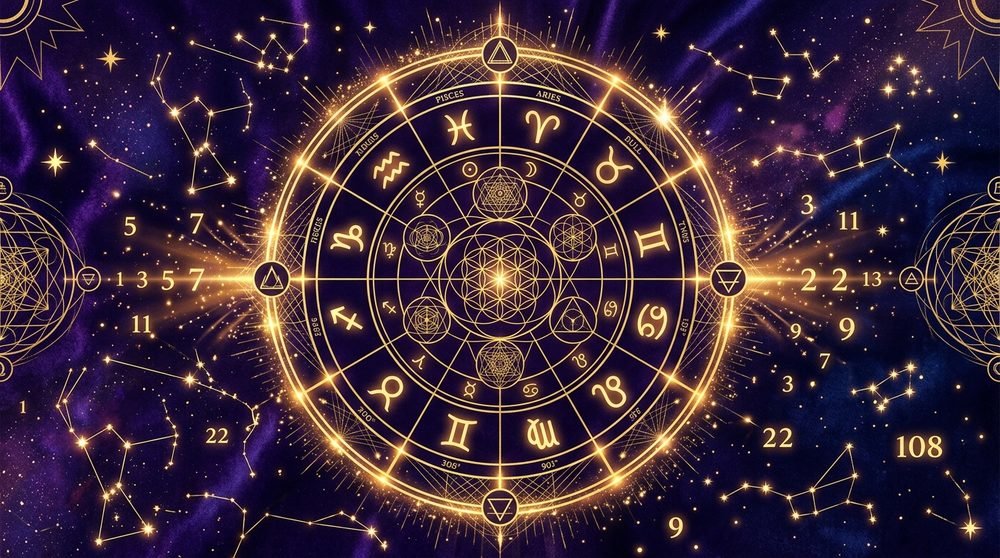
| Chart Structure | Square or Diamond layout (North Indian or South Indian grid) | Circular 360-degree pie wheel chart |
| Primary Focus | Ascendant (Lagna) and Moon Sign (Chandra Rashi) | Sun Sign (Surya Rashi) and psychological archetypes |
| Planets Evaluated | 7 Traditional Planets (Sun to Saturn) + 2 Lunar Nodes (Rahu, Ketu) | Traditional 7 + Modern outer planets (Uranus, Neptune, Pluto) |
| Sub-Divisions | 27 Nakshatras and 16+ Divisional Charts (Vargas like Navamsha D9) | Decans, terms, and minor planetary aspect degrees |
| Aspect Calculations | Drishti (whole-sign aspects specific to each graha, e.g. Saturn 3, 7, 10) | Geometric degree angles (Trines 120°, Squares 90°, Sextiles 60°) |
Core Interpretive and Philosophical Differences
The two traditions stem from different cultural and philosophical paradigms:
Western Astrology has evolved significantly alongside 20th-century depth psychology, heavily influenced by Carl Jung. It views the birth chart as a psychological map of potentials, inner complexes, and archetypes. It focuses on free will, self-realization, and understanding internal motivations: "Why do I feel or act this way?"
Vedic Astrology is historically anchored in the Vedic understanding of karma, dharma (life duty), and reincarnation. It views the birth chart (Janam Kundli) as a karmic balance sheet, reflecting the fruits of past actions (Prarabdha Karma) coming into maturation in this lifetime. It places strong emphasis on external life circumstances, family lineage, physical vitality, career cycles, and timing: "When will this phase manifest, and how can I navigate it with clarity?"
The Unique Power of Dashas and Nakshatras
Two features of Vedic astrology are widely admired worldwide for their analytical precision:
- The Dasha System (Planetary Time Periods): Unlike Western transits alone, Vedic astrology employs the Vimshottari Dasha system—a 120-year cycle where different planets take turns acting as the primary ruler of your life experience. When a person enters a Jupiter Mahadasha, themes of expansion, knowledge, and family prosper; when entering a Saturn period, patience, discipline, and structural endurance take center stage.
- The 27 Nakshatras (Lunar Mansions): While the 12 signs divide the sky into 30° segments, Vedic astrology further divides each sign into 27 Nakshatras of 13°20' each. Each Nakshatra has its own presiding deity, planetary ruler, and mythological symbol, allowing a vastly more nuanced analysis of psychological temperament than a broad 12-sign categorization.
Sun Sign vs. Moon Sign
In Western horoscopes, the Sun changes signs roughly once a month, making Sun signs broad and accessible. In Vedic astrology, the Moon changes signs every 2.25 days. Because the Moon governs the emotional mind (Manas), everyday consciousness, and visceral reactions, your Vedic Moon sign (Chandra Rashi) is traditionally considered far more influential in daily life.
Common Terminology Comparison
To help you navigate consultations in either tradition, here is a quick terminology reference:
| Vedic Term (Sanskrit) | Western Equivalent | Meaning |
|---|---|---|
| Lagna | Ascendant / Rising Sign | The exact zodiac sign rising on the eastern horizon at birth; governs physical persona and vitality. |
| Rashi | Zodiac Sign / Constellation | One of the twelve 30-degree sectors of the celestial belt. |
| Chandra Rashi | Moon Sign | The sign in which the Moon was located at birth; governs mental and emotional nature. |
| Surya Rashi | Sun Sign | The sign in which the Sun was placed; reflects soul essence and external vitality. |
| Bhava | House | One of the 12 divisions of human life (career, wealth, health, marriage, etc.). |
| Gochar | Transits | The ongoing, real-time movement of planets through the sky in relation to your birth chart. |
| Dasha | Major Progression Period | The operational planetary timeline cycle governing specific life phases. |
How to Understand and Reconcile Both Systems
When newcomers discover that their sign changes from Western to Vedic, they often ask: "Which one is the real me?"
The answer is that both systems provide valid perspectives when interpreted within their respective frameworks. A person who exhibits bold, expressive traits through their Western Leo Sun may simultaneously discover that their Vedic Cancer Moon and Gemini Ascendant explain their private sensitivity and quick mental curiosity.
To explore your Vedic birth chart, planetary placements, and lagna, you can use our free online Kundli Checker tool.
Frequently Asked Questions
The difference is caused by the astronomical phenomenon known as the Precession of the Equinoxes. Vedic astrology uses the Sidereal zodiac, which tracks the actual observable positions of constellations in space. Western astrology uses the Tropical zodiac, which fixes the start of Aries to the spring equinox. Over thousands of years, this has created an offset of roughly 24 degrees (known as Ayanamsha), which shifts approximately 85% of people one zodiac sign backward in Vedic astrology.
Neither system is objectively superior or 'incorrect.' They operate on distinct foundational assumptions and serve complementary purposes. Western astrology is celebrated for psychological character insights and personal self-development, while Vedic astrology is widely valued for karmic patterns, life timing through Dasha cycles, and relationship compatibility.
In Vedic astrology, Rahu (North Lunar Node) and Ketu (South Lunar Node) are treated as full shadow planets (Chhaya Grahas) of immense karmic importance. Rahu represents worldly desire, unconventional ambition, and obsession, while Ketu symbolizes spiritual detachment, liberation (moksha), and past-life karma.
Yes. Many astrologers and seekers consult both traditions. Western astrology provides valuable perspectives on modern psychological motivations, while Vedic astrology provides deep insight into structural life phases, family patterns, and timing.